McDewey
/mcpPage 1089
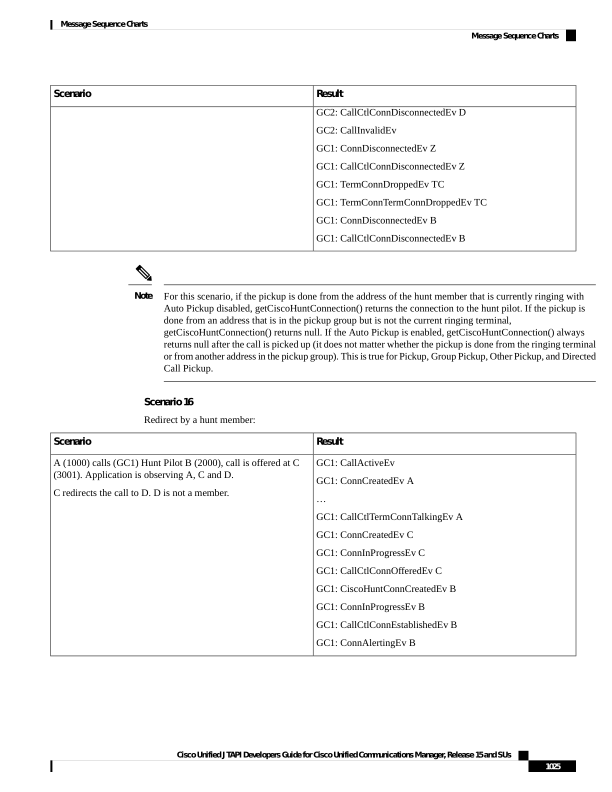
↗ View in doc contextResult Scenario GC2: CallCtlConnDisconnectedEv D GC2: CallInvalidEv GC1: ConnDisconnectedEv Z GC1: CallCtlConnDisconnectedEv Z GC1: TermConnDroppedEv TC GC1: TermConnTermConnDroppedEv TC GC1: ConnDisconnectedEv B GC1: CallCtlConnDisconnectedEv B For this scenario, if the pickup is done from the address of the hunt member that is currently ringing with Auto Pickup disabled, getCiscoHuntConnection() returns the connection to the hunt pilot. If the pickup is done from an address that is in the pickup group but is not the current ringing terminal, getCiscoHuntConnection() returns null. If the Auto Pickup is enabled, getCiscoHuntConnection() always returns null after the call is picked up (it does not matter whether the pickup is done from the ringing terminal or from another address in the pickup group). This is true for Pickup, Group Pickup, Other Pickup, and Directed Call Pickup. Note Scenario 16 Redirect by a hunt member: Result Scenario GC1: CallActiveEv GC1: ConnCreatedEv A … GC1: CallCtlTermConnTalkingEv A GC1: ConnCreatedEv C GC1: ConnInProgressEv C GC1: CallCtlConnOfferedEv C GC1: CiscoHuntConnCreatedEv B GC1: ConnInProgressEv B GC1: CallCtlConnEstablishedEv B GC1: ConnAlertingEv B A (1000) calls (GC1) Hunt Pilot B (2000), call is offered at C (3001). Application is observing A, C and D. C redirects the call to D. D is not a member. Cisco Unified JTAPI Developers Guide for Cisco Unified Communications Manager, Release 15 and SUs 1025 Message Sequence Charts Message Sequence Charts