McDewey
/mcpPage 1457
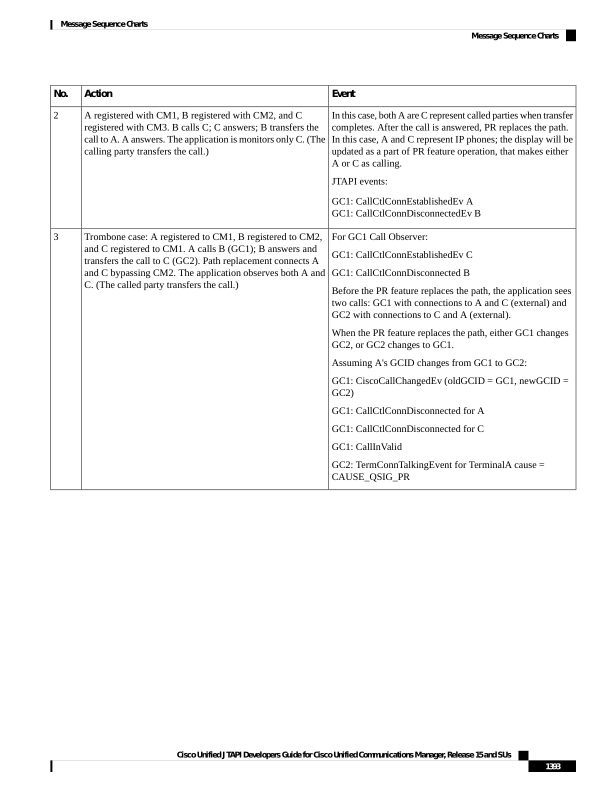
↗ View in doc contextEvent Action No. In this case, both A are C represent called parties when transfer completes. After the call is answered, PR replaces the path. In this case, A and C represent IP phones; the display will be updated as a part of PR feature operation, that makes either A or C as calling. JTAPI events: GC1: CallCtlConnEstablishedEv A GC1: CallCtlConnDisconnectedEv B A registered with CM1, B registered with CM2, and C registered with CM3. B calls C; C answers; B transfers the call to A. A answers. The application is monitors only C. (The calling party transfers the call.) 2 For GC1 Call Observer: GC1: CallCtlConnEstablishedEv C GC1: CallCtlConnDisconnected B Before the PR feature replaces the path, the application sees two calls: GC1 with connections to A and C (external) and GC2 with connections to C and A (external). When the PR feature replaces the path, either GC1 changes GC2, or GC2 changes to GC1. Assuming A's GCID changes from GC1 to GC2: GC1: CiscoCallChangedEv (oldGCID = GC1, newGCID = GC2) GC1: CallCtlConnDisconnected for A GC1: CallCtlConnDisconnected for C GC1: CallInValid GC2: TermConnTalkingEvent for TerminalA cause = CAUSE_QSIG_PR Trombone case: A registered to CM1, B registered to CM2, and C registered to CM1. A calls B (GC1); B answers and transfers the call to C (GC2). Path replacement connects A and C bypassing CM2. The application observes both A and C. (The called party transfers the call.) 3 Cisco Unified JTAPI Developers Guide for Cisco Unified Communications Manager, Release 15 and SUs 1393 Message Sequence Charts Message Sequence Charts