McDewey
/mcpPage 566
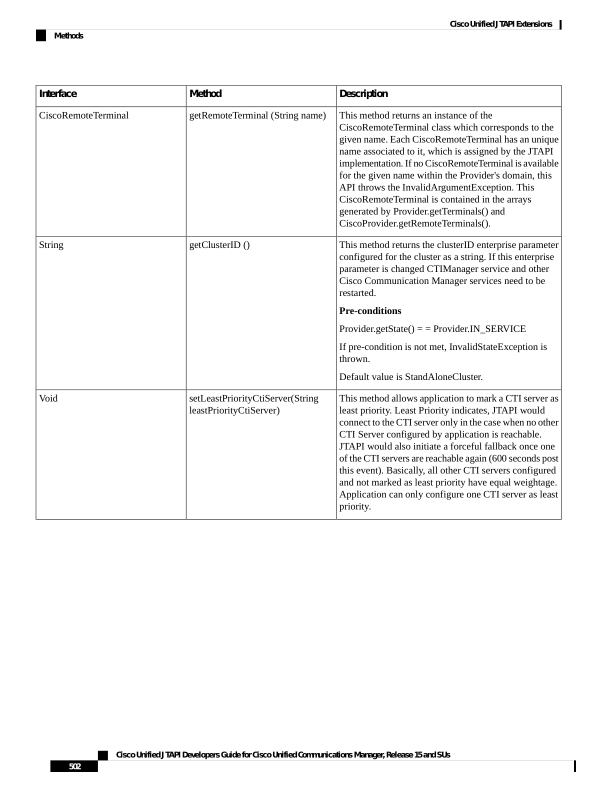
↗ View in doc contextDescription Method Interface This method returns an instance of the CiscoRemoteTerminal class which corresponds to the given name. Each CiscoRemoteTerminal has an unique name associated to it, which is assigned by the JTAPI implementation. If no CiscoRemoteTerminal is available for the given name within the Provider's domain, this API throws the InvalidArgumentException. This CiscoRemoteTerminal is contained in the arrays generated by Provider.getTerminals() and CiscoProvider.getRemoteTerminals(). getRemoteTerminal (String name) CiscoRemoteTerminal This method returns the clusterID enterprise parameter configured for the cluster as a string. If this enterprise parameter is changed CTIManager service and other Cisco Communication Manager services need to be restarted. Pre-conditions Provider.getState() = = Provider.IN_SERVICE If pre-condition is not met, InvalidStateException is thrown. Default value is StandAloneCluster. getClusterID () String This method allows application to mark a CTI server as least priority. Least Priority indicates, JTAPI would connect to the CTI server only in the case when no other CTI Server configured by application is reachable. JTAPI would also initiate a forceful fallback once one of the CTI servers are reachable again (600 seconds post this event). Basically, all other CTI servers configured and not marked as least priority have equal weightage. Application can only configure one CTI server as least priority. setLeastPriorityCtiServer(String leastPriorityCtiServer) Void Cisco Unified JTAPI Developers Guide for Cisco Unified Communications Manager, Release 15 and SUs 502 Cisco Unified JTAPI Extensions Methods