McDewey
/mcpPage 18
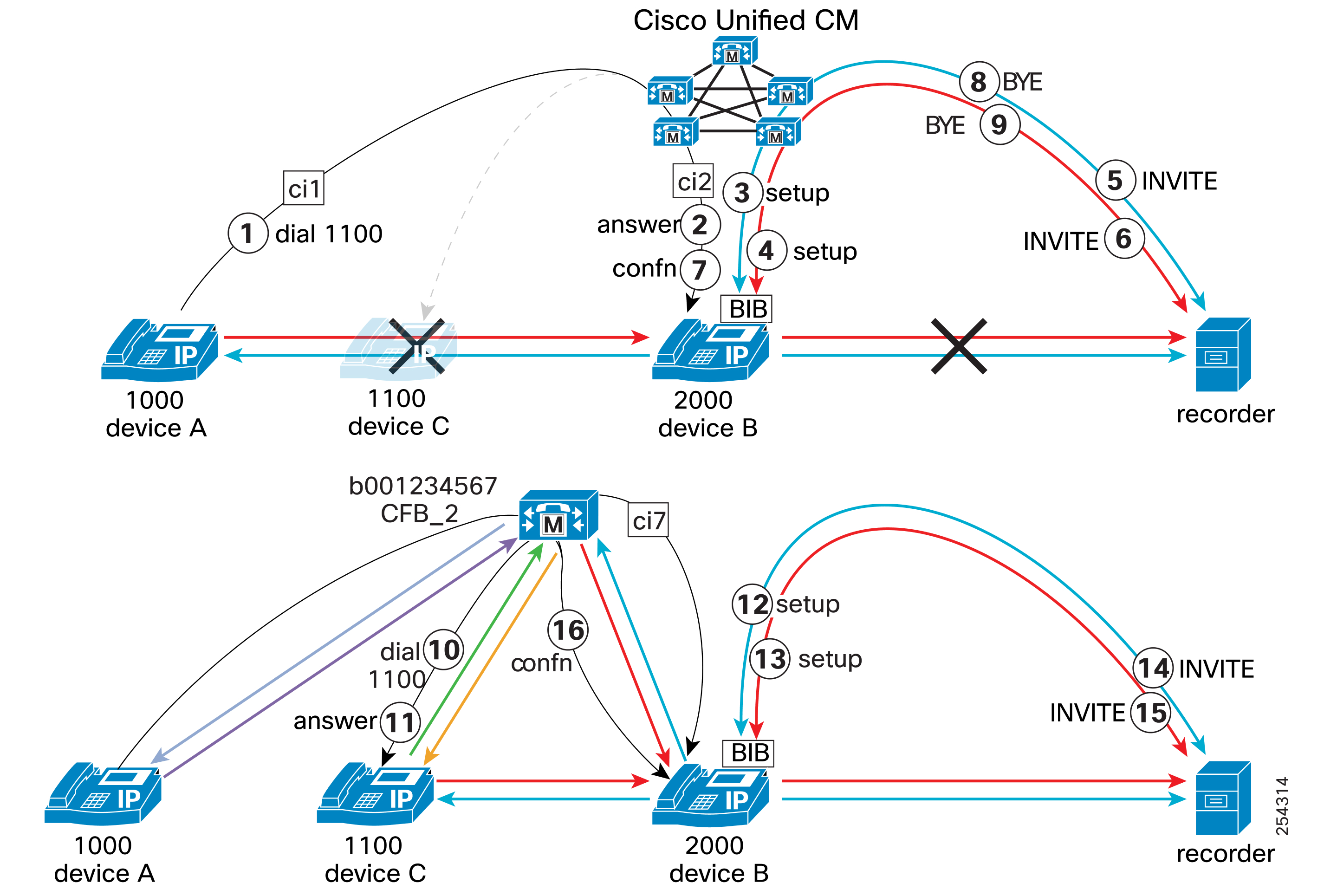
↗ View in doc contextBecause partyB is now connected to a new far-end party, CFB_2, Cisco Unified Communications Manager restarts the recording. The agent IP phone forks the customer voice stream to the recorder. Note the following particularities of call processing that apply in this use case: • After the conference gets established, the far-end party is changed to the conference bridge (CFB). • Cisco Unified Communications Manager restarts the recording. Note the header information of the INVITE messages from step5. The SIP header enhancement feature adds the information in bold text to the INVITE message header. Step 5 INVITE Message Header Information From: <sip:2000@ucm1;x-nearend;x-refci=ci2;x-nearenddevice=deviceB; x-farendrefci=ci1;x-farenddevice=deviceA;x-farendaddr=1000>;tag=fromtag1 Near-End Party in Local Cluster Creates Conference In this use case for automatic call recording, the near-end party in a local cluster creates a conference. The following figure illustrates this use case. Figure 16: Near-End Party in Local Cluster Creates Conference In this use case, the following entities participate: • The far-end customer call originates from DN1000 deviceA. • The near-end agent receives the call at DN2000 deviceB. • PartyB creates a conference by conferencing in DN1100 deviceC. During an automatic call recording session where the near-end (agent) party in the local cluster creates a conference by bringing an additional far-end party into the call, the following steps take place: 18