McDewey
/mcpPage 26
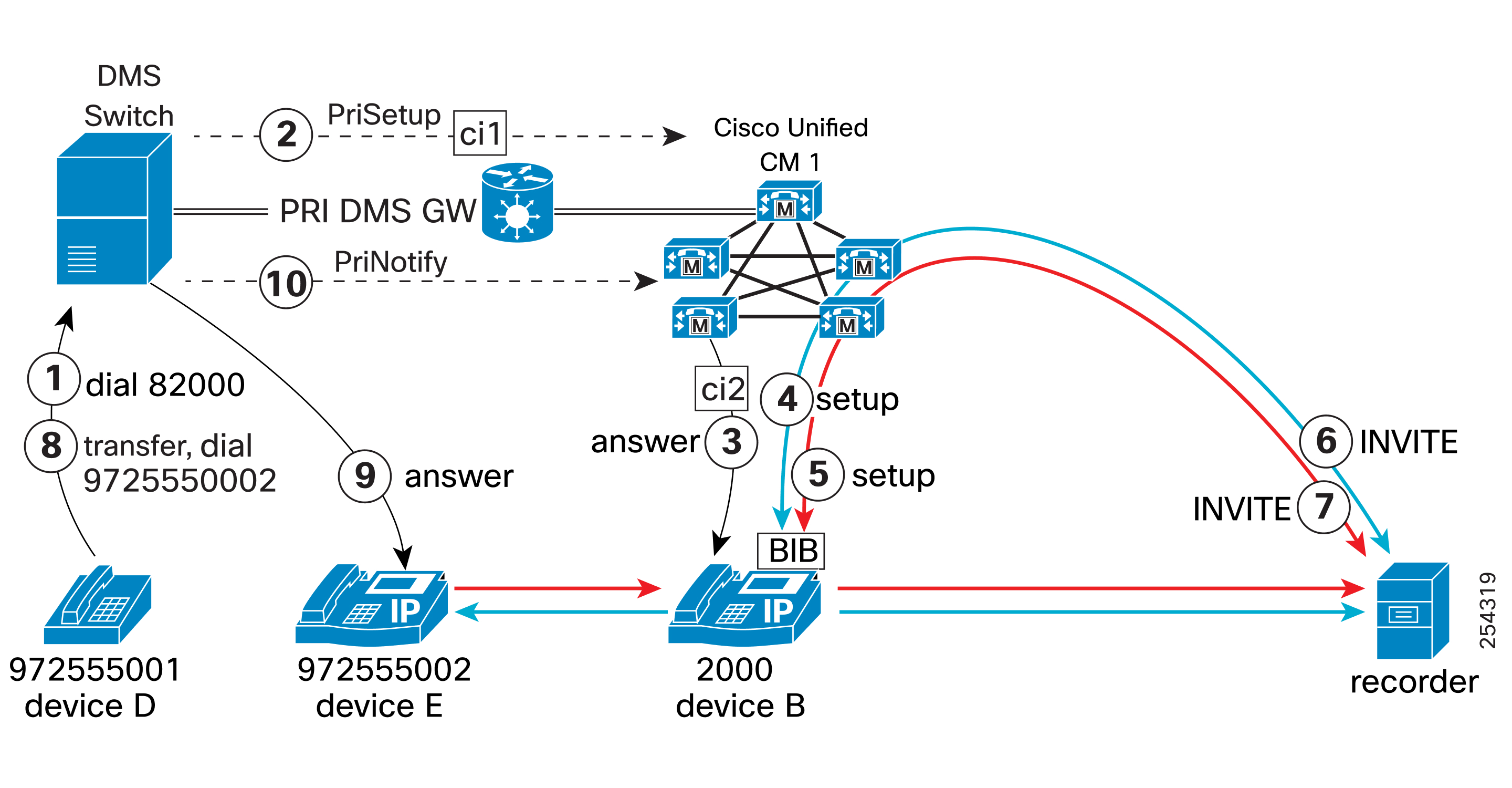
↗ View in doc contextRemote PBX sends UPDATE. 14. Cisco Unified Communications Manager restarts the recording. 15. Local Cisco Unified Communications Manager initiates path replacement process directly connects deviceA with device B and eliminates routing through the remote PBX. Note the following particularities of call processing that apply in this use case: • Path replacement replaces a hairpin call to remote PBX so that partyA and partyB are directly connected without routing through the remote PBX. • The far-end call information gets updated when transfer completes. • When path replacement completes, the far-end device also gets updated. Note the header information of the INVITE messages from step6. The SIP header enhancement feature adds the information in bold text to the INVITE message header. Step 6 INVITE Message Header Information From: <sip:2000@ucm1;x-nearend;x-refci=ci2;x-nearenddevice=deviceB; x-farendrefci=ci1;x-farenddevice=PriQSIGGW;x-farendaddr=3000>;tag=fromtag1 Far-End Party Transfers Call Across DMS Gateway In this use case for automatic call recording, the far-end party transfers a call across a DMS gateway. The following figure illustrates this use case. Figure 21: Far-End Party Transfers Call Across DMS Gateway In this use case, the following entities participate: • The customer call originates from DN9725550001 deviceD that connects to a DMS switch. • The agent receives the call at DN2000 deviceB in clusterCisco Unified CM1. • AgentD transfers the call to DN9725550002 deviceE that connects to a DMS switch. During an automatic call recording session where the far-end (agent) party that connects through a DMS switch transfers the call to a phone that also connects through a DMS switch, the following steps take place: 1. PartyD (far-end party = customer across DMS switch) calls partyB (near-end party = agent) in local cluster by dialing 82000. 26