McDewey
/mcpPage 10
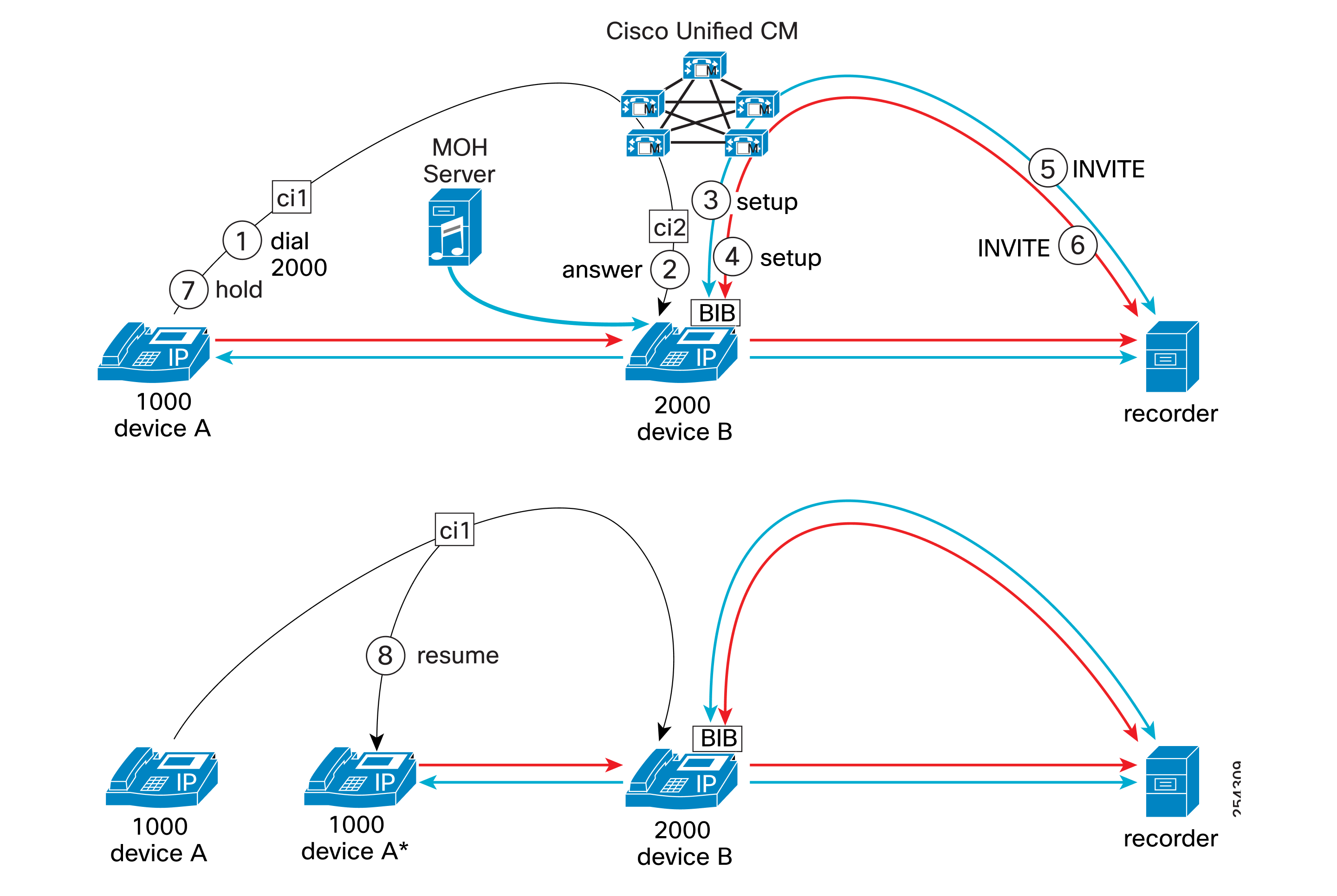
↗ View in doc contextStep 5 INVITE Message Header Information From: <sip:2000@ucm1;x-nearend;x-refci=ci2;x-nearenddevice=deviceB; x-farendrefci=ci1;x-farenddevice=deviceA;x-farendaddr=1000>;tag=fromtag1 Step 6 INVITE Message Header Information From: <sip:2000@ucm1;x-farend;x-refci=ci2;x-nearenddevice=deviceB; x-farendrefci=ci1;x-farenddevice=deviceA;x-farendaddr=1000>;tag=fromtag2 In both message headers, x-farendrefci specifies the far-end (customer) call leg caller ID. x-farenddevice specifies the far-end device name. x-farendaddr specifies the far-end DN. Local Cluster Far-End Party Hold/Resume In this use case for automatic call recording, the far-end party that belongs to the local cluster places the call on hold and resumes the call from a different device. The following figure illustrates this use case. Figure 11: Far-End Party in Local Cluster Holds and Resumes Call From Different Device In this use case, the following entities participate: • The customer call originates from DN1000 deviceA. • The agent receives the call at DN2000 deviceB. • After placing the call on hold, the customer resumes the call from DN1000 deviceA’. During an automatic call recording session that involves a customer (far-end party) in the local cluster that places the call on hold then resumes the call from a different device, the following steps take place: 1. PartyA (far-end party = customer in local cluster) calls partyB (near-end party = agent). 10