McDewey
/mcpPage 24
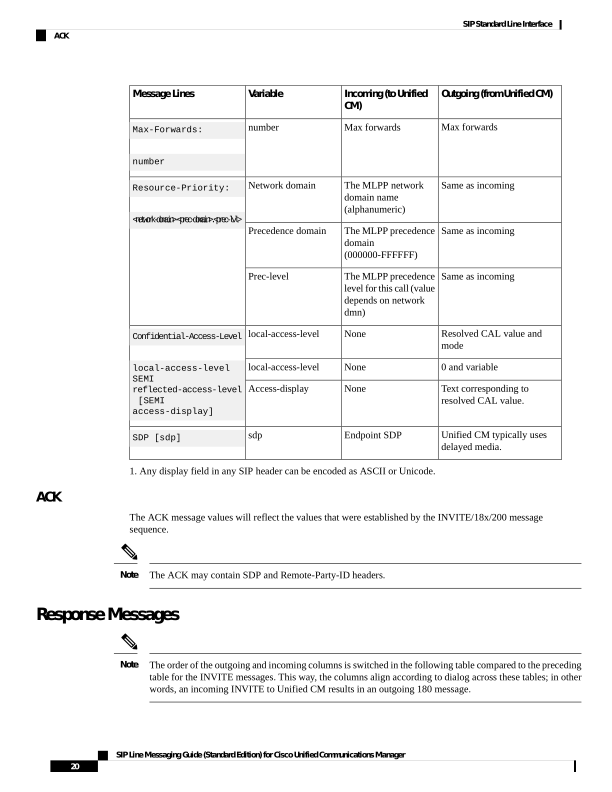
↗ View in doc contextOutgoing (from Unified CM) Incoming (to Unified CM) Variable Message Lines Max forwards Max forwards number Max-Forwards: number Same as incoming The MLPP network domain name (alphanumeric) Network domain Resource-Priority: <network-domain>-<prec-domain>.<prec-lvl> Same as incoming The MLPP precedence domain (000000-FFFFFF) Precedence domain Same as incoming The MLPP precedence level for this call (value depends on network dmn) Prec-level Resolved CAL value and mode None local-access-level Confidential-Access-Level local-access-level SEMI reflected-access-level [SEMI access-display] 0 and variable None local-access-level Text corresponding to resolved CAL value. None Access-display Unified CM typically uses delayed media. Endpoint SDP sdp SDP [sdp]
- Any display field in any SIP header can be encoded as ASCII or Unicode. ACK The ACK message values will reflect the values that were established by the INVITE/18x/200 message sequence. The ACK may contain SDP and Remote-Party-ID headers. Note Response Messages The order of the outgoing and incoming columns is switched in the following table compared to the preceding table for the INVITE messages. This way, the columns align according to dialog across these tables; in other words, an incoming INVITE to Unified CM results in an outgoing 180 message. Note SIP Line Messaging Guide (Standard Edition) for Cisco Unified Communications Manager 20 SIP Standard Line Interface ACK