McDewey
/mcpPage 1402
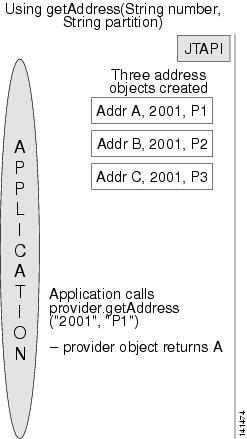
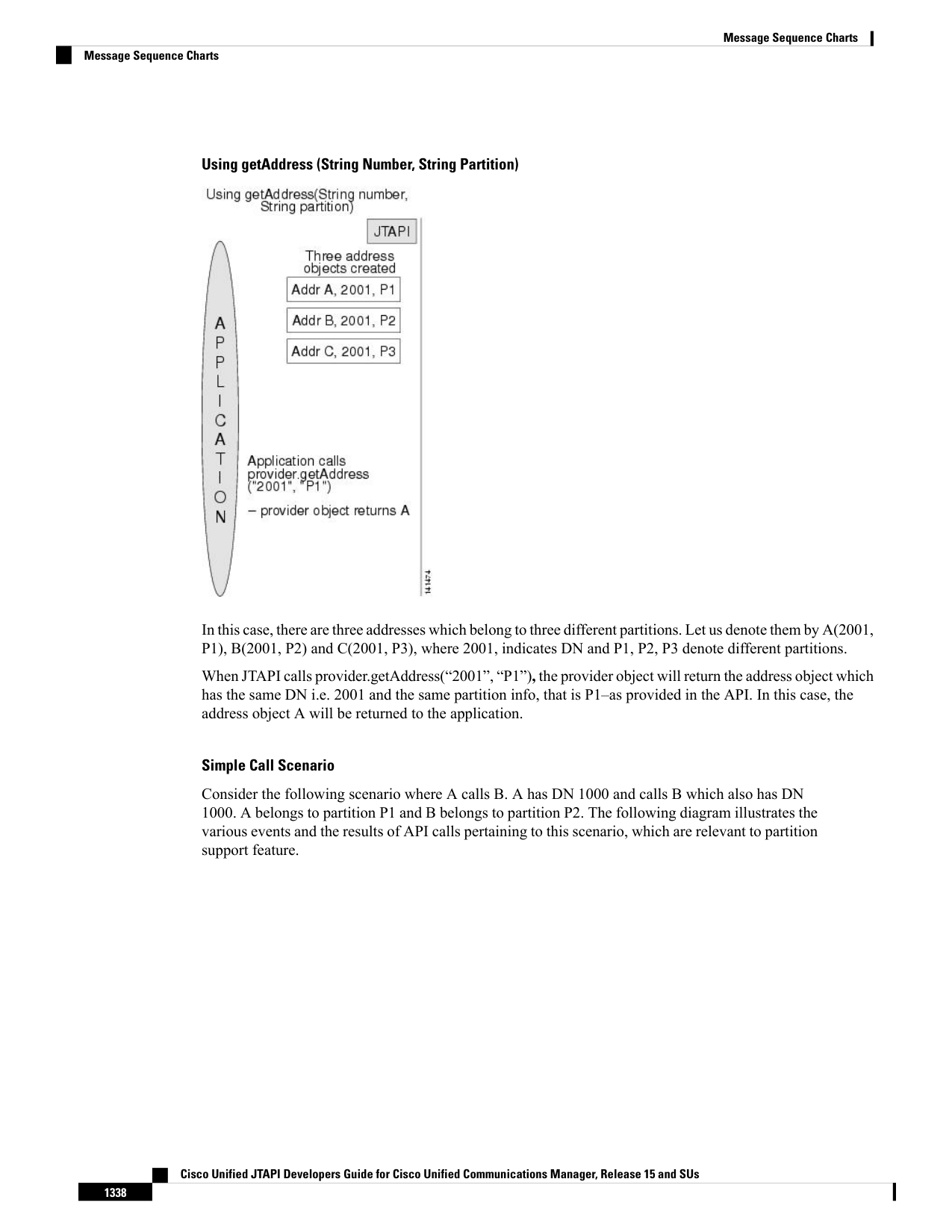
↗ View in doc contextUsing getAddress (String Number, String Partition) In this case, there are three addresses which belong to three different partitions. Let us denote them by A(2001, P1), B(2001, P2) and C(2001, P3), where 2001, indicates DN and P1, P2, P3 denote different partitions. When JTAPI calls provider.getAddress(“2001”, “P1”), the provider object will return the address object which has the same DN i.e. 2001 and the same partition info, that is P1–as provided in the API. In this case, the address object A will be returned to the application. Simple Call Scenario Consider the following scenario where A calls B. A has DN 1000 and calls B which also has DN 1000. A belongs to partition P1 and B belongs to partition P2. The following diagram illustrates the various events and the results of API calls pertaining to this scenario, which are relevant to partition support feature. Cisco Unified JTAPI Developers Guide for Cisco Unified Communications Manager, Release 15 and SUs 1338 Message Sequence Charts Message Sequence Charts