McDewey
Multi-vendor documentation library · semantic search · MCP endpoint at
/mcpPage 1511
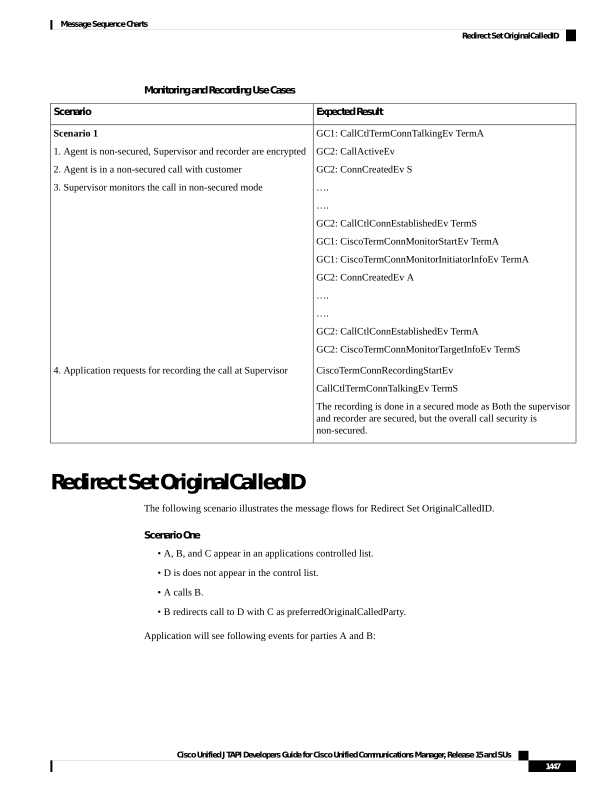
↗ View in doc contextMonitoring and Recording Use Cases Expected Result Scenario GC1: CallCtlTermConnTalkingEv TermA GC2: CallActiveEv GC2: ConnCreatedEv S …. …. GC2: CallCtlConnEstablishedEv TermS GC1: CiscoTermConnMonitorStartEv TermA GC1: CiscoTermConnMonitorInitiatorInfoEv TermA GC2: ConnCreatedEv A …. …. GC2: CallCtlConnEstablishedEv TermA GC2: CiscoTermConnMonitorTargetInfoEv TermS Scenario 1
- Agent is non-secured, Supervisor and recorder are encrypted
- Agent is in a non-secured call with customer
- Supervisor monitors the call in non-secured mode CiscoTermConnRecordingStartEv CallCtlTermConnTalkingEv TermS The recording is done in a secured mode as Both the supervisor and recorder are secured, but the overall call security is non-secured.
- Application requests for recording the call at Supervisor Redirect Set OriginalCalledID The following scenario illustrates the message flows for Redirect Set OriginalCalledID. Scenario One • A, B, and C appear in an applications controlled list. • D is does not appear in the control list. • A calls B. • B redirects call to D with C as preferredOriginalCalledParty. Application will see following events for parties A and B: Cisco Unified JTAPI Developers Guide for Cisco Unified Communications Manager, Release 15 and SUs 1447 Message Sequence Charts Redirect Set OriginalCalledID