McDewey
/mcpPage 197
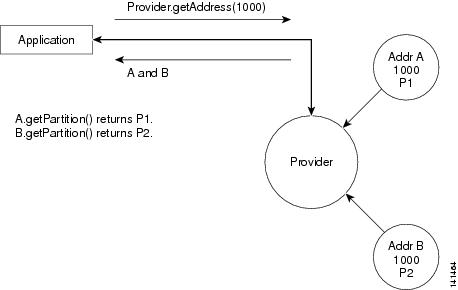
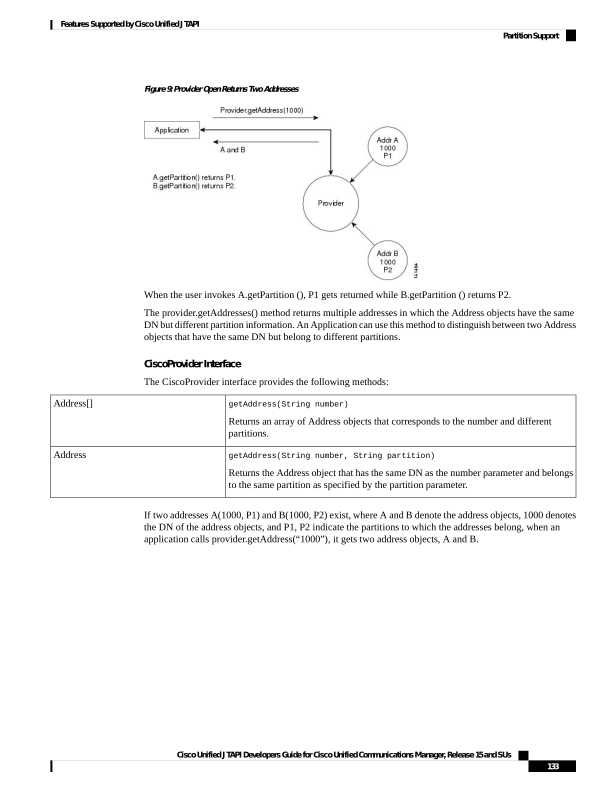
↗ View in doc contextFigure 9: Provider Open Returns Two Addresses When the user invokes A.getPartition (), P1 gets returned while B.getPartition () returns P2. The provider.getAddresses() method returns multiple addresses in which the Address objects have the same DN but different partition information. An Application can use this method to distinguish between two Address objects that have the same DN but belong to different partitions. CiscoProvider Interface The CiscoProvider interface provides the following methods: getAddress(String number) Returns an array of Address objects that corresponds to the number and different partitions. Address[] getAddress(String number, String partition) Returns the Address object that has the same DN as the number parameter and belongs to the same partition as specified by the partition parameter. Address If two addresses A(1000, P1) and B(1000, P2) exist, where A and B denote the address objects, 1000 denotes the DN of the address objects, and P1, P2 indicate the partitions to which the addresses belong, when an application calls provider.getAddress(“1000”), it gets two address objects, A and B. Cisco Unified JTAPI Developers Guide for Cisco Unified Communications Manager, Release 15 and SUs 133 Features Supported by Cisco Unified JTAPI Partition Support