McDewey
/mcpPage 17
↗ View in doc contextPreferred Architecture for Cisco Collaboration Release 15 On-Premises Deployments
PAGE 17
Call Control
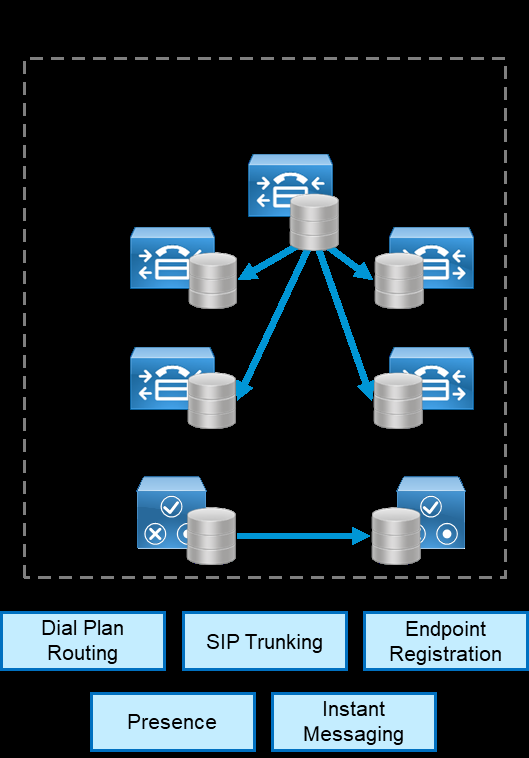
All the TFTP nodes and subscriber nodes periodically receive updates of the configuration database from the publisher node. These database updates enable all the subscriber nodes to operate in a consistent configuration state. To provide load balancing of call processing services across the subscribers and to reduce failover response times, deploy each call processing subscriber pair in an active/active redundancy scheme. For IM and Presence, we recommend deploying a minimum of one IM and Presence publisher and one subscriber. The IM and Presence publisher is not a dedicated node, and the publisher and subscriber provide redundancy for each other. (Figure 6) For enterprise deployments, add more pairs of IM and Presence subscribers or Unified CM call processing nodes as needed to accommodate more users. Figure 6. Cisco Unified CM Cluster
SIP Trunk Recommendations Use SIP trunks from Cisco Unified CM to communicate with all the components in the Cisco Collaboration on- premises Preferred Architecture, including external entities such as third-party systems. SIP trunks offer the following benefits: