McDewey
/mcpPage 222
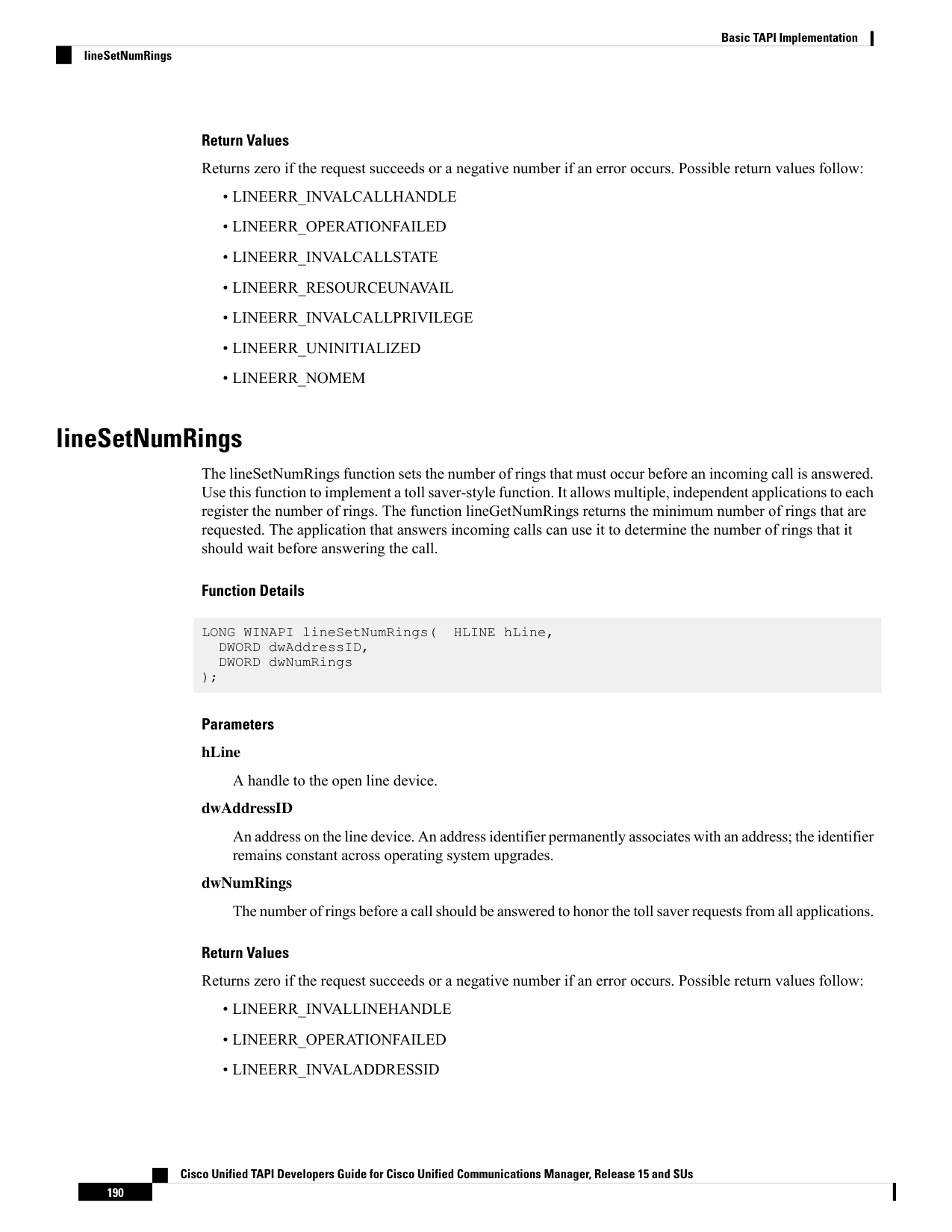
↗ View in doc contextReturn Values Returns zero if the request succeeds or a negative number if an error occurs. Possible return values follow: • LINEERR_INVALCALLHANDLE • LINEERR_OPERATIONFAILED • LINEERR_INVALCALLSTATE • LINEERR_RESOURCEUNAVAIL • LINEERR_INVALCALLPRIVILEGE • LINEERR_UNINITIALIZED • LINEERR_NOMEM lineSetNumRings The lineSetNumRings function sets the number of rings that must occur before an incoming call is answered. Use this function to implement a toll saver-style function. It allows multiple, independent applications to each register the number of rings. The function lineGetNumRings returns the minimum number of rings that are requested. The application that answers incoming calls can use it to determine the number of rings that it should wait before answering the call. Function Details LONG WINAPI lineSetNumRings( HLINE hLine, DWORD dwAddressID, DWORD dwNumRings ); Parameters hLine A handle to the open line device. dwAddressID An address on the line device. An address identifier permanently associates with an address; the identifier remains constant across operating system upgrades. dwNumRings The number of rings before a call should be answered to honor the toll saver requests from all applications. Return Values Returns zero if the request succeeds or a negative number if an error occurs. Possible return values follow: • LINEERR_INVALLINEHANDLE • LINEERR_OPERATIONFAILED • LINEERR_INVALADDRESSID Cisco Unified TAPI Developers Guide for Cisco Unified Communications Manager, Release 15 and SUs 190 Basic TAPI Implementation lineSetNumRings