McDewey
/mcpPage 225
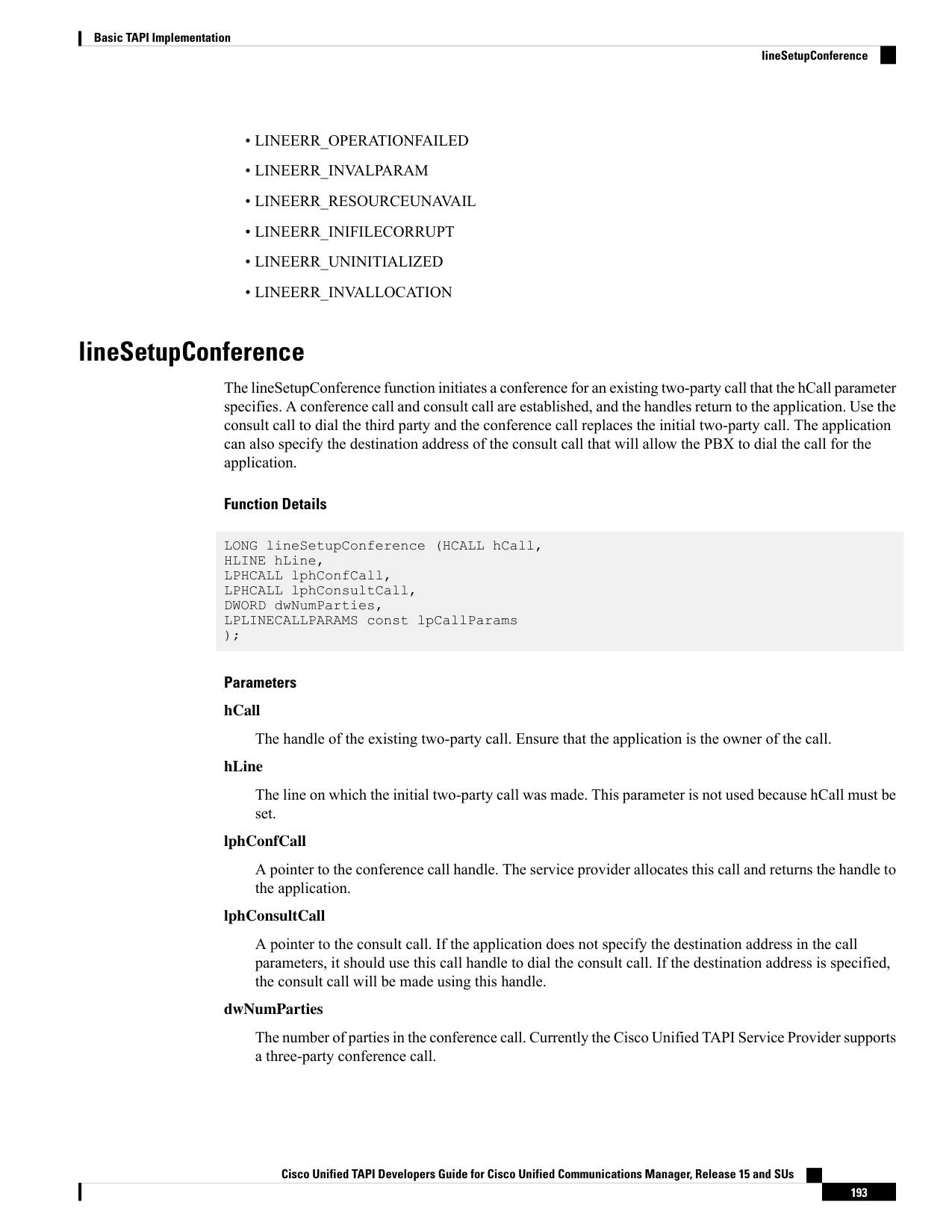
↗ View in doc context• LINEERR_OPERATIONFAILED • LINEERR_INVALPARAM • LINEERR_RESOURCEUNAVAIL • LINEERR_INIFILECORRUPT • LINEERR_UNINITIALIZED • LINEERR_INVALLOCATION lineSetupConference The lineSetupConference function initiates a conference for an existing two-party call that the hCall parameter specifies. A conference call and consult call are established, and the handles return to the application. Use the consult call to dial the third party and the conference call replaces the initial two-party call. The application can also specify the destination address of the consult call that will allow the PBX to dial the call for the application. Function Details LONG lineSetupConference (HCALL hCall, HLINE hLine, LPHCALL lphConfCall, LPHCALL lphConsultCall, DWORD dwNumParties, LPLINECALLPARAMS const lpCallParams ); Parameters hCall The handle of the existing two-party call. Ensure that the application is the owner of the call. hLine The line on which the initial two-party call was made. This parameter is not used because hCall must be set. lphConfCall A pointer to the conference call handle. The service provider allocates this call and returns the handle to the application. lphConsultCall A pointer to the consult call. If the application does not specify the destination address in the call parameters, it should use this call handle to dial the consult call. If the destination address is specified, the consult call will be made using this handle. dwNumParties The number of parties in the conference call. Currently the Cisco Unified TAPI Service Provider supports a three-party conference call. Cisco Unified TAPI Developers Guide for Cisco Unified Communications Manager, Release 15 and SUs 193 Basic TAPI Implementation lineSetupConference