McDewey
/mcpPage 399
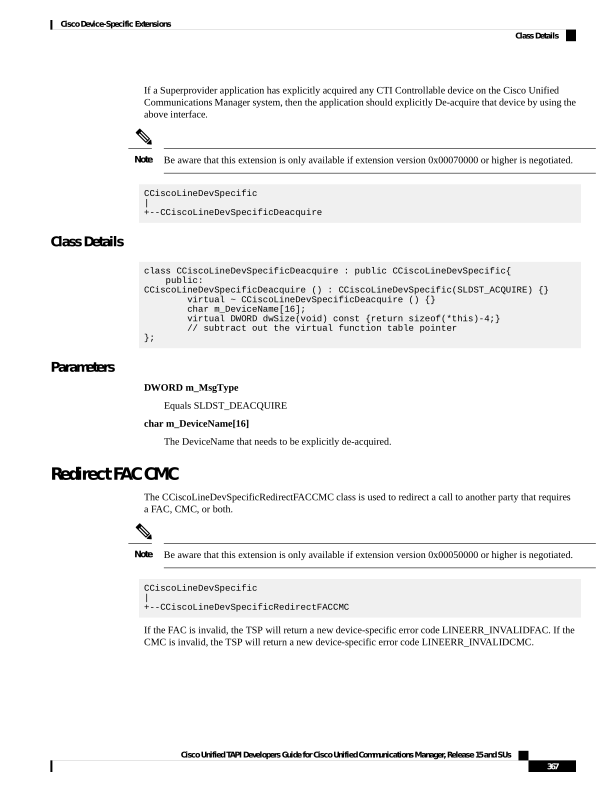
↗ View in doc contextIf a Superprovider application has explicitly acquired any CTI Controllable device on the Cisco Unified Communications Manager system, then the application should explicitly De-acquire that device by using the above interface. Be aware that this extension is only available if extension version 0x00070000 or higher is negotiated. Note CCiscoLineDevSpecific | +--CCiscoLineDevSpecificDeacquire Class Details class CCiscoLineDevSpecificDeacquire : public CCiscoLineDevSpecific{ public: CCiscoLineDevSpecificDeacquire () : CCiscoLineDevSpecific(SLDST_ACQUIRE) {} virtual ~ CCiscoLineDevSpecificDeacquire () {} char m_DeviceName[16]; virtual DWORD dwSize(void) const {return sizeof(*this)-4;} // subtract out the virtual function table pointer }; Parameters DWORD m_MsgType Equals SLDST_DEACQUIRE char m_DeviceName[16] The DeviceName that needs to be explicitly de-acquired. Redirect FAC CMC The CCiscoLineDevSpecificRedirectFACCMC class is used to redirect a call to another party that requires a FAC, CMC, or both. Be aware that this extension is only available if extension version 0x00050000 or higher is negotiated. Note CCiscoLineDevSpecific | +--CCiscoLineDevSpecificRedirectFACCMC If the FAC is invalid, the TSP will return a new device-specific error code LINEERR_INVALIDFAC. If the CMC is invalid, the TSP will return a new device-specific error code LINEERR_INVALIDCMC. Cisco Unified TAPI Developers Guide for Cisco Unified Communications Manager, Release 15 and SUs 367 Cisco Device-Specific Extensions Class Details