McDewey
/mcpPage 518
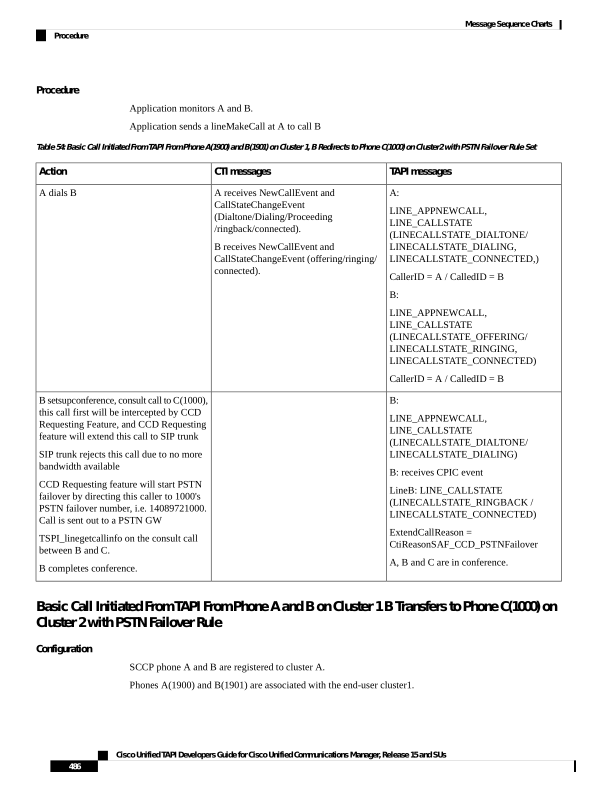
↗ View in doc contextProcedure Application monitors A and B. Application sends a lineMakeCall at A to call B Table 54: Basic Call Initiated From TAPI From Phone A(1900) and B(1901) on Cluster 1, B Redirects to Phone C(1000) on Cluster2 with PSTN Failover Rule Set TAPI messages CTI messages Action A: LINE_APPNEWCALL, LINE_CALLSTATE (LINECALLSTATE_DIALTONE/ LINECALLSTATE_DIALING, LINECALLSTATE_CONNECTED,) CallerID = A / CalledID = B B: LINE_APPNEWCALL, LINE_CALLSTATE (LINECALLSTATE_OFFERING/ LINECALLSTATE_RINGING, LINECALLSTATE_CONNECTED) CallerID = A / CalledID = B A receives NewCallEvent and CallStateChangeEvent (Dialtone/Dialing/Proceeding /ringback/connected). B receives NewCallEvent and CallStateChangeEvent (offering/ringing/ connected). A dials B B: LINE_APPNEWCALL, LINE_CALLSTATE (LINECALLSTATE_DIALTONE/ LINECALLSTATE_DIALING) B: receives CPIC event LineB: LINE_CALLSTATE (LINECALLSTATE_RINGBACK / LINECALLSTATE_CONNECTED) ExtendCallReason = CtiReasonSAF_CCD_PSTNFailover A, B and C are in conference. B setsupconference, consult call to C(1000), this call first will be intercepted by CCD Requesting Feature, and CCD Requesting feature will extend this call to SIP trunk SIP trunk rejects this call due to no more bandwidth available CCD Requesting feature will start PSTN failover by directing this caller to 1000's PSTN failover number, i.e. 14089721000. Call is sent out to a PSTN GW TSPI_linegetcallinfo on the consult call between B and C. B completes conference. Basic Call Initiated From TAPI From Phone A and B on Cluster 1 B Transfers to Phone C(1000) on Cluster 2 with PSTN Failover Rule Configuration SCCP phone A and B are registered to cluster A. Phones A(1900) and B(1901) are associated with the end-user cluster1. Cisco Unified TAPI Developers Guide for Cisco Unified Communications Manager, Release 15 and SUs 486 Message Sequence Charts Procedure