McDewey
/mcpPage 675
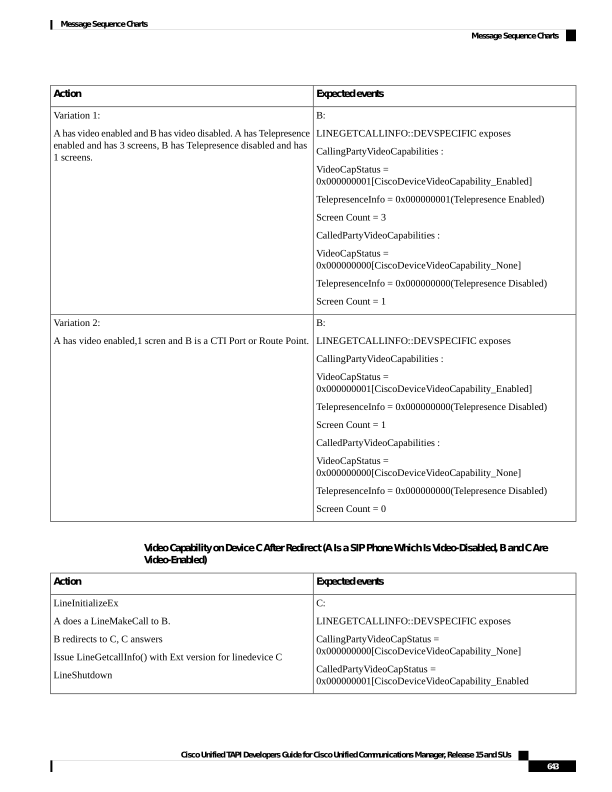
↗ View in doc contextExpected events Action B: LINEGETCALLINFO::DEVSPECIFIC exposes CallingPartyVideoCapabilities : VideoCapStatus = 0x000000001[CiscoDeviceVideoCapability_Enabled] TelepresenceInfo = 0x000000001(Telepresence Enabled) Screen Count = 3 CalledPartyVideoCapabilities : VideoCapStatus = 0x000000000[CiscoDeviceVideoCapability_None] TelepresenceInfo = 0x000000000(Telepresence Disabled) Screen Count = 1 Variation 1: A has video enabled and B has video disabled. A has Telepresence enabled and has 3 screens, B has Telepresence disabled and has 1 screens. B: LINEGETCALLINFO::DEVSPECIFIC exposes CallingPartyVideoCapabilities : VideoCapStatus = 0x000000001[CiscoDeviceVideoCapability_Enabled] TelepresenceInfo = 0x000000000(Telepresence Disabled) Screen Count = 1 CalledPartyVideoCapabilities : VideoCapStatus = 0x000000000[CiscoDeviceVideoCapability_None] TelepresenceInfo = 0x000000000(Telepresence Disabled) Screen Count = 0 Variation 2: A has video enabled,1 scren and B is a CTI Port or Route Point. Video Capability on Device C After Redirect (A Is a SIP Phone Which Is Video-Disabled, B and C Are Video-Enabled) Expected events Action C: LINEGETCALLINFO::DEVSPECIFIC exposes CallingPartyVideoCapStatus = 0x000000000[CiscoDeviceVideoCapability_None] CalledPartyVideoCapStatus = 0x000000001[CiscoDeviceVideoCapability_Enabled LineInitializeEx A does a LineMakeCall to B. B redirects to C, C answers Issue LineGetcallInfo() with Ext version for linedevice C LineShutdown Cisco Unified TAPI Developers Guide for Cisco Unified Communications Manager, Release 15 and SUs 643 Message Sequence Charts Message Sequence Charts