McDewey
/mcpPage 797
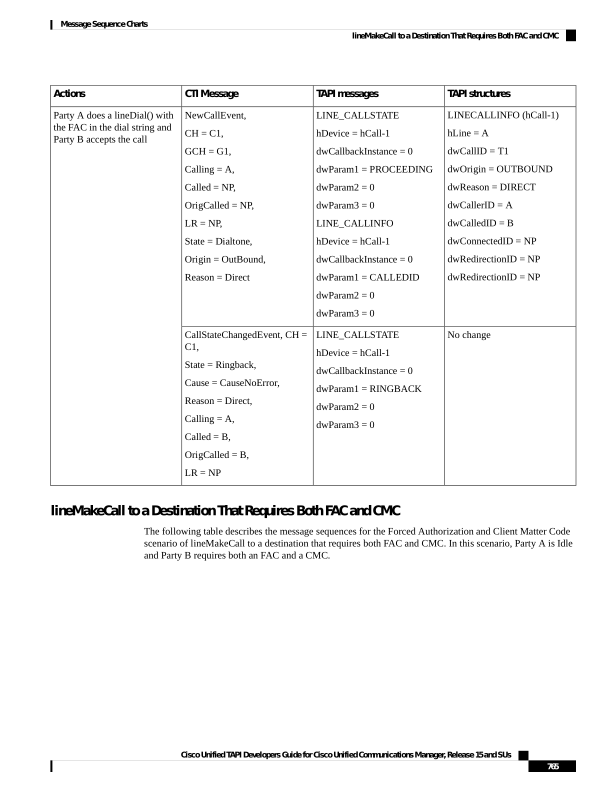
↗ View in doc contextTAPI structures TAPI messages CTI Message Actions LINECALLINFO (hCall-1) hLine = A dwCallID = T1 dwOrigin = OUTBOUND dwReason = DIRECT dwCallerID = A dwCalledID = B dwConnectedID = NP dwRedirectionID = NP dwRedirectionID = NP LINE_CALLSTATE hDevice = hCall-1 dwCallbackInstance = 0 dwParam1 = PROCEEDING dwParam2 = 0 dwParam3 = 0 LINE_CALLINFO hDevice = hCall-1 dwCallbackInstance = 0 dwParam1 = CALLEDID dwParam2 = 0 dwParam3 = 0 NewCallEvent, CH = C1, GCH = G1, Calling = A, Called = NP, OrigCalled = NP, LR = NP, State = Dialtone, Origin = OutBound, Reason = Direct Party A does a lineDial() with the FAC in the dial string and Party B accepts the call No change LINE_CALLSTATE hDevice = hCall-1 dwCallbackInstance = 0 dwParam1 = RINGBACK dwParam2 = 0 dwParam3 = 0 CallStateChangedEvent, CH = C1, State = Ringback, Cause = CauseNoError, Reason = Direct, Calling = A, Called = B, OrigCalled = B, LR = NP lineMakeCall to a Destination That Requires Both FAC and CMC The following table describes the message sequences for the Forced Authorization and Client Matter Code scenario of lineMakeCall to a destination that requires both FAC and CMC. In this scenario, Party A is Idle and Party B requires both an FAC and a CMC. Cisco Unified TAPI Developers Guide for Cisco Unified Communications Manager, Release 15 and SUs 765 Message Sequence Charts lineMakeCall to a Destination That Requires Both FAC and CMC