McDewey
/mcpPage 893
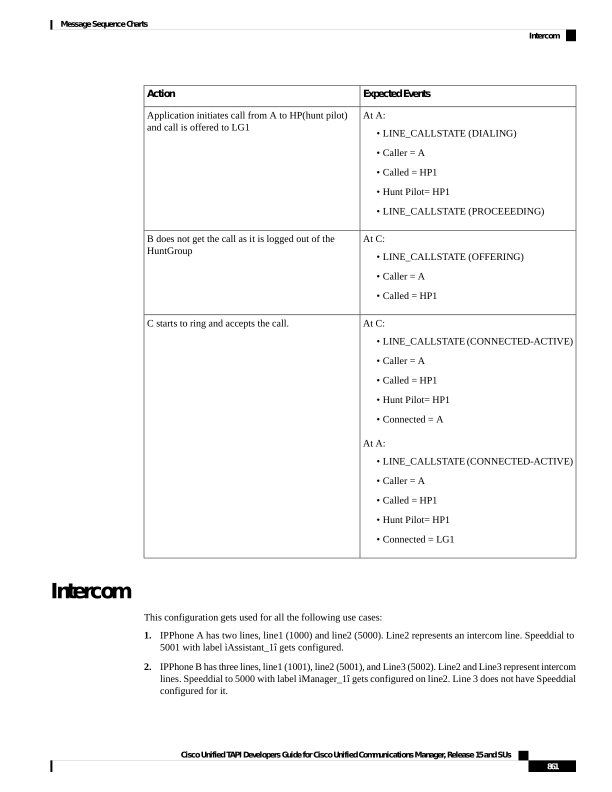
↗ View in doc contextExpected Events Action At A: • LINE_CALLSTATE (DIALING) • Caller = A • Called = HP1 • Hunt Pilot= HP1 • LINE_CALLSTATE (PROCEEEDING) Application initiates call from A to HP(hunt pilot) and call is offered to LG1 At C: • LINE_CALLSTATE (OFFERING) • Caller = A • Called = HP1 B does not get the call as it is logged out of the HuntGroup At C: • LINE_CALLSTATE (CONNECTED-ACTIVE) • Caller = A • Called = HP1 • Hunt Pilot= HP1 • Connected = A At A: • LINE_CALLSTATE (CONNECTED-ACTIVE) • Caller = A • Called = HP1 • Hunt Pilot= HP1 • Connected = LG1 C starts to ring and accepts the call. Intercom This configuration gets used for all the following use cases: 1. IPPhone A has two lines, line1 (1000) and line2 (5000). Line2 represents an intercom line. Speeddial to 5001 with label ìAssistant_1î gets configured. 2. IPPhone B has three lines, line1 (1001), line2 (5001), and Line3 (5002). Line2 and Line3 represent intercom lines. Speeddial to 5000 with label ìManager_1î gets configured on line2. Line 3 does not have Speeddial configured for it. Cisco Unified TAPI Developers Guide for Cisco Unified Communications Manager, Release 15 and SUs 861 Message Sequence Charts Intercom