McDewey
Multi-vendor documentation library · semantic search · MCP endpoint at
/mcpPage 961
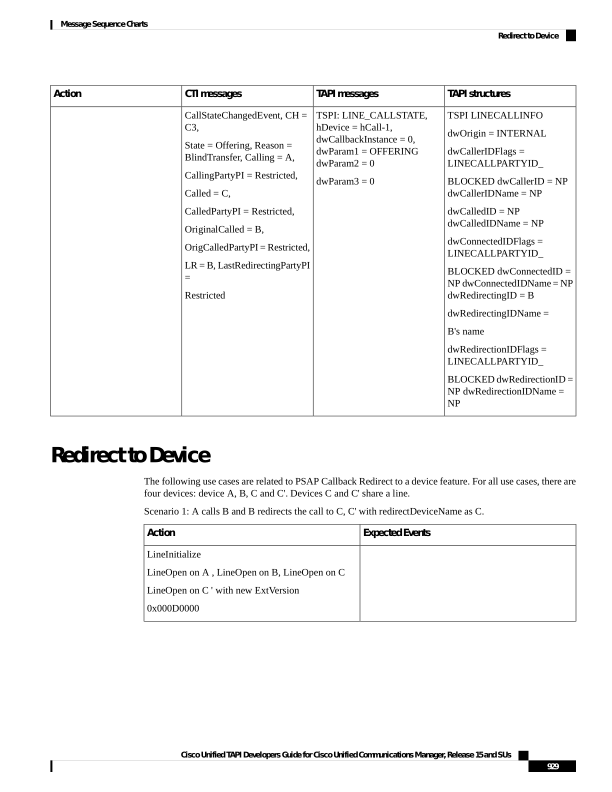
↗ View in doc contextTAPI structures TAPI messages CTI messages Action TSPI LINECALLINFO dwOrigin = INTERNAL dwCallerIDFlags = LINECALLPARTYID_ BLOCKED dwCallerID = NP dwCallerIDName = NP dwCalledID = NP dwCalledIDName = NP dwConnectedIDFlags = LINECALLPARTYID_ BLOCKED dwConnectedID = NP dwConnectedIDName = NP dwRedirectingID = B dwRedirectingIDName = B's name dwRedirectionIDFlags = LINECALLPARTYID_ BLOCKED dwRedirectionID = NP dwRedirectionIDName = NP TSPI: LINE_CALLSTATE, hDevice = hCall-1, dwCallbackInstance = 0, dwParam1 = OFFERING dwParam2 = 0 dwParam3 = 0 CallStateChangedEvent, CH = C3, State = Offering, Reason = BlindTransfer, Calling = A, CallingPartyPI = Restricted, Called = C, CalledPartyPI = Restricted, OriginalCalled = B, OrigCalledPartyPI = Restricted, LR = B, LastRedirectingPartyPI
Restricted Redirect to Device The following use cases are related to PSAP Callback Redirect to a device feature. For all use cases, there are four devices: device A, B, C and C'. Devices C and C' share a line. Scenario 1: A calls B and B redirects the call to C, C' with redirectDeviceName as C. Expected Events Action LineInitialize LineOpen on A , LineOpen on B, LineOpen on C LineOpen on C ' with new ExtVersion 0x000D0000 Cisco Unified TAPI Developers Guide for Cisco Unified Communications Manager, Release 15 and SUs 929 Message Sequence Charts Redirect to Device