McDewey
/mcpPage 9
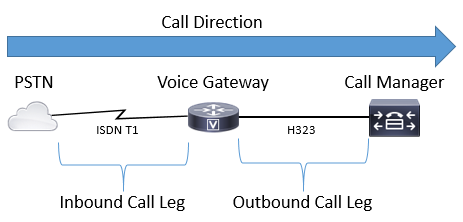
↗ View in doc contextImage 1 shows a call from the PSTN to CUCM routing through a Cisco Voice Gateway and the respective inbound and outbound call leg information. Image 1 - Inbound and Outbound Call Legs Illustrated A successful call through a Cisco Gateway ALWAYS (see note) matches an inbound or outbound dial-peer to route properly. Inbound and outbound dial-peers are similar to the call-legs mentioned earlier. In Image 1, the call arrives from the PSTN at the Cisco Gateway and needs to match an inbound dial-peer. Then the gateway utilizes an outbound dial-peer to route the call to the next call agent. It is important to remember that these terms are defined from the perspective of the Cisco Gateway. By matching a dial-peer for each side of the call, an administrator has the power to control many aspects of each specific call leg. Examples of these include voice codecs, DTMF preferences, digit manipulation, where the call is to be routed, and many other settings. Dial-peers can be configured with both inbound and outbound match statements so matching the same dial-peer for both the in-leg and out-leg is possible if a valid inbound and outbound matching configuration is applied to that specific dial-peer. Note: The exception to this rule is with MGCP and SCCP voice-ports. These signaling protocols do not follow normal dial-peer matching mechanism during call routing. See the SCCP and MGCP section for further details. Image 2 illustrates the same inbound and outbound call legs as Image 1 but with the respective dial-peers for a call from the PSTN to CUCM routing through an Cisco Voice Gateway.