McDewey
/mcpPage 2
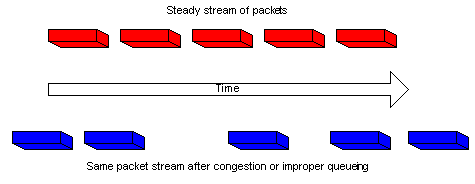
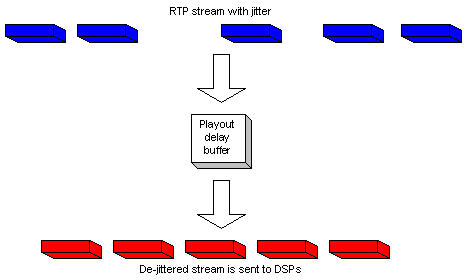
↗ View in doc contextconfiguration errors, this steady stream can become lumpy, or the delay between each packet can vary instead of remaining constant. This diagram illustrates how a steady stream of packets is handled. When a router receives a Real−Time Protocol (RTP) audio stream for Voice over IP (VoIP), it must compensate for the jitter that is encountered. The mechanism that handles this function is the playout delay buffer. The playout delay buffer must buffer these packets and then play them out in a steady stream to the digital signal processors (DSPs) to be converted back to an analog audio stream. The playout delay buffer is also sometimes referred to as the de−jitter buffer. This diagram illustrates how jitter is handled. If the jitter is so large that it causes packets to be received out of the range of this buffer, the out−of−range packets are discarded and dropouts are heard in the audio. For losses as small as one packet, the DSP interpolates what it thinks the audio should be and no problem is audible. When jitter exceeds what the DSP can do to make up for the missing packets, audio problems are heard. This diagram illustrates how excessive jitter is handled.