McDewey
/mcpPage 31
↗ View in doc contextPreferred Architecture for Cisco Collaboration Release 15 On-Premises Deployments
PAGE 31
Voice Messaging
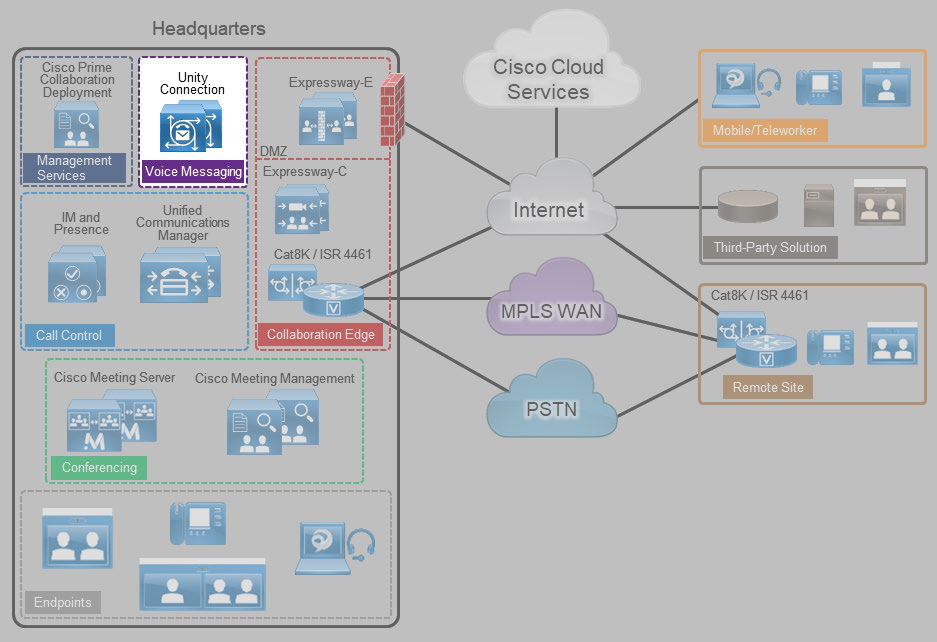
Voice Messaging Voice messaging is considered to be a basic requirement and essential service for any collaboration deployment. Cisco Unity Connection enables users to access and manage voice messages from their email inbox, web browser, Cisco Jabber client, Cisco IP Phone, or TelePresence endpoint. The Cisco Collaboration on-premises Preferred Architecture includes Cisco Unity Connection to enable voice messaging for the collaboration solution (Figure 14). Figure 14. Architecture for Voice Messaging
Table 9 lists the roles of the voice messaging components in this architecture and the services they provide. Table 9. Components for Voice Messaging Module Component Description Voice Messaging Cisco Unity Connection Provides unified messaging and voicemail services Recommended Deployment Cisco Unity Connection supports a cluster configuration in active/active mode to provide both high availability and redundancy. As depicted in Figure 15, a Unity Connection cluster consists of a maximum of two nodes, one publisher and one subscriber (#1). If one of the Unity Connection nodes fails, the other active node in the cluster handles all the calls and HTTP requests for the Unity Connection cluster. Each server in the Unity Connection cluster must have enough voice messaging ports to handle all calls for the cluster.