McDewey
/mcpPage 32
↗ View in doc contextPreferred Architecture for Cisco Collaboration Release 15 On-Premises Deployments
PAGE 32
Voice Messaging
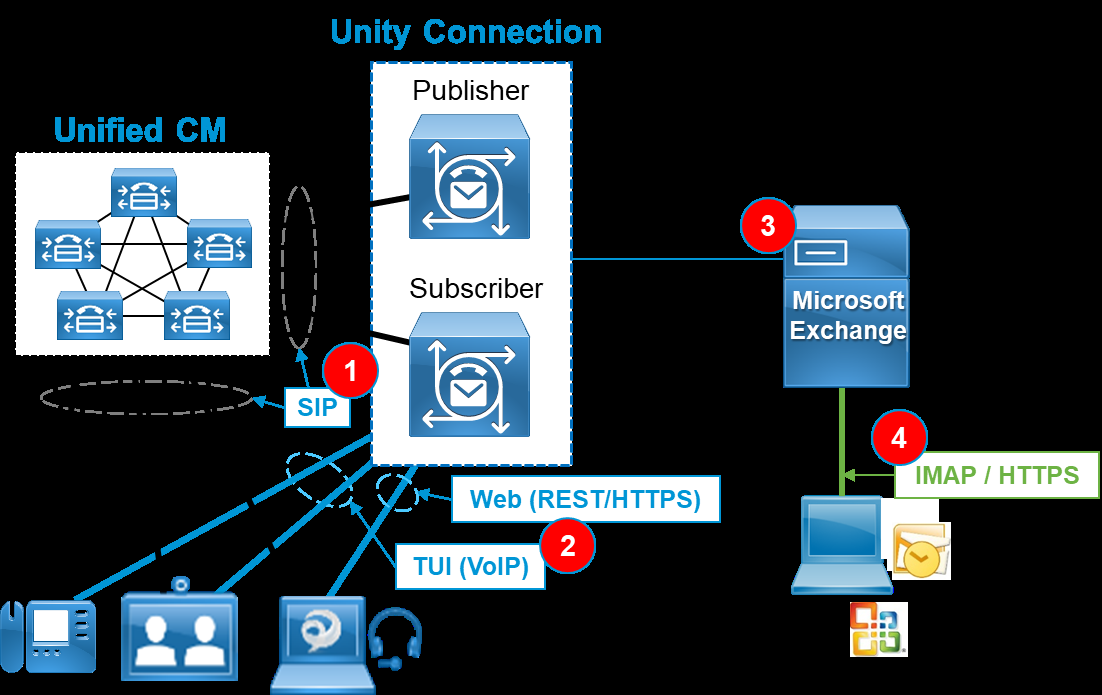
As shown in Figure 15, the integration between Cisco Unified CM and Unity Connection relies on SIP for communications (#1). In addition, hardware and software endpoints are able to access voice messaging services through VoIP communications or via REST-based HTTPS communications (#2). The voicemail pilot number designates the directory number that users dial to access their voice messages. Unified CM automatically dials the voice messaging number when users press the Messages button on their phone (VoIP). Visual Voicemail allows users to access voicemail from the graphical interface on the IP phone or Jabber client (HTTPS). Users can view a list of messages and play messages from the list. Users can also compose, reply to, forward, and delete messages. Each voicemail message displays data that includes the date and time when the message was left, urgency level, and message length. Figure 15. Unified Messaging Architecture
In summary, we recommend deploying Cisco Unity Connection as follows: • Deploy two Cisco Unity Connection servers for each Cisco Unified CM cluster to provide high availability and redundancy. • Use SIP trunks to integrate Unity Connection with Unified CM. Configure two SIP trunks, one for each Unity Connection server in a pair. • Import user information from the enterprise LDAP directory to Unity Connection. Each mailbox must have a unique voicemail number. Unity Connection supports both E.164 and + E.164 formats for the extension of an end-user account (user with a voice mailbox). Unity Connection also supports alternate extensions per user. • Configure visual voicemail and unified messaging, including Single Inbox, and then enable users for appropriate voice message retrieval methods.