McDewey
/mcpPage 671
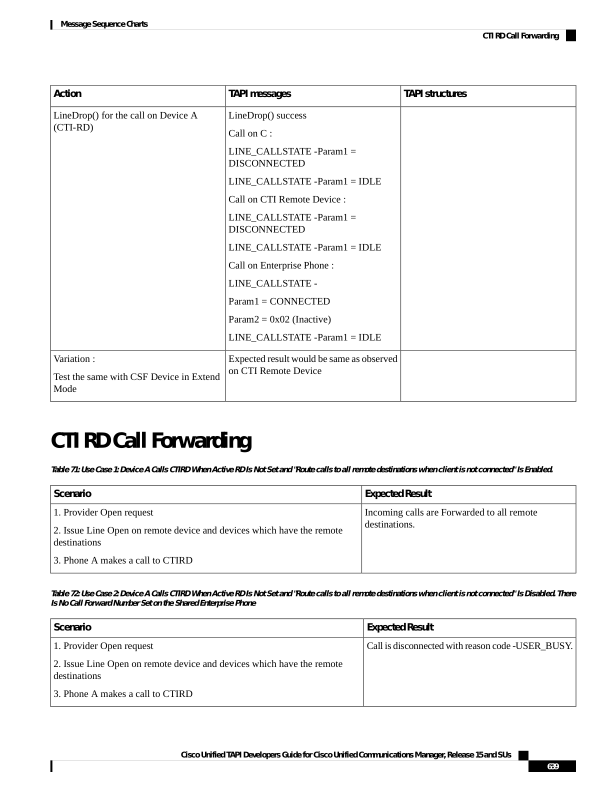
↗ View in doc contextTAPI structures TAPI messages Action LineDrop() success Call on C : LINE_CALLSTATE -Param1 = DISCONNECTED LINE_CALLSTATE -Param1 = IDLE Call on CTI Remote Device : LINE_CALLSTATE -Param1 = DISCONNECTED LINE_CALLSTATE -Param1 = IDLE Call on Enterprise Phone : LINE_CALLSTATE - Param1 = CONNECTED Param2 = 0x02 (Inactive) LINE_CALLSTATE -Param1 = IDLE LineDrop() for the call on Device A (CTI-RD) Expected result would be same as observed on CTI Remote Device Variation : Test the same with CSF Device in Extend Mode CTI RD Call Forwarding Table 71: Use Case 1: Device A Calls CTIRD When Active RD Is Not Set and "Route calls to all remote destinations when client is not connected" Is Enabled. Expected Result Scenario Incoming calls are Forwarded to all remote destinations.
- Provider Open request
- Issue Line Open on remote device and devices which have the remote destinations
- Phone A makes a call to CTIRD Table 72: Use Case 2: Device A Calls CTIRD When Active RD Is Not Set and "Route calls to all remote destinations when client is not connected" Is Disabled. There Is No Call Forward Number Set on the Shared Enterprise Phone Expected Result Scenario Call is disconnected with reason code -USER_BUSY.
- Provider Open request
- Issue Line Open on remote device and devices which have the remote destinations
- Phone A makes a call to CTIRD Cisco Unified TAPI Developers Guide for Cisco Unified Communications Manager, Release 15 and SUs 639 Message Sequence Charts CTI RD Call Forwarding