McDewey
/mcpPage 939
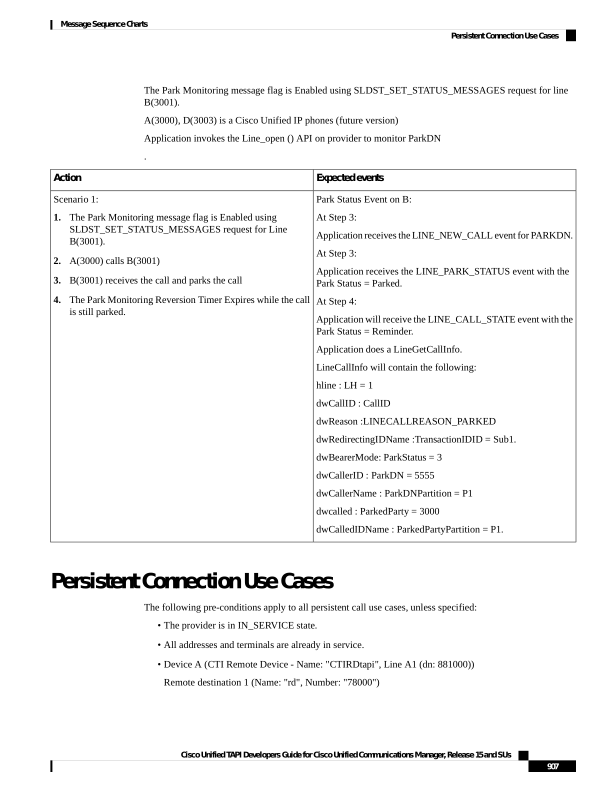
↗ View in doc contextThe Park Monitoring message flag is Enabled using SLDST_SET_STATUS_MESSAGES request for line B(3001). A(3000), D(3003) is a Cisco Unified IP phones (future version) Application invokes the Line_open () API on provider to monitor ParkDN . Expected events Action Park Status Event on B: At Step 3: Application receives the LINE_NEW_CALL event for PARKDN. At Step 3: Application receives the LINE_PARK_STATUS event with the Park Status = Parked. At Step 4: Application will receive the LINE_CALL_STATE event with the Park Status = Reminder. Application does a LineGetCallInfo. LineCallInfo will contain the following: hline : LH = 1 dwCallID : CallID dwReason :LINECALLREASON_PARKED dwRedirectingIDName :TransactionIDID = Sub1. dwBearerMode: ParkStatus = 3 dwCallerID : ParkDN = 5555 dwCallerName : ParkDNPartition = P1 dwcalled : ParkedParty = 3000 dwCalledIDName : ParkedPartyPartition = P1. Scenario 1: 1. The Park Monitoring message flag is Enabled using SLDST_SET_STATUS_MESSAGES request for Line B(3001). 2. A(3000) calls B(3001) 3. B(3001) receives the call and parks the call 4. The Park Monitoring Reversion Timer Expires while the call is still parked. Persistent Connection Use Cases The following pre-conditions apply to all persistent call use cases, unless specified: • The provider is in IN_SERVICE state. • All addresses and terminals are already in service. • Device A (CTI Remote Device - Name: "CTIRDtapi", Line A1 (dn: 881000)) Remote destination 1 (Name: "rd", Number: "78000") Cisco Unified TAPI Developers Guide for Cisco Unified Communications Manager, Release 15 and SUs 907 Message Sequence Charts Persistent Connection Use Cases