McDewey
/mcpPage 971
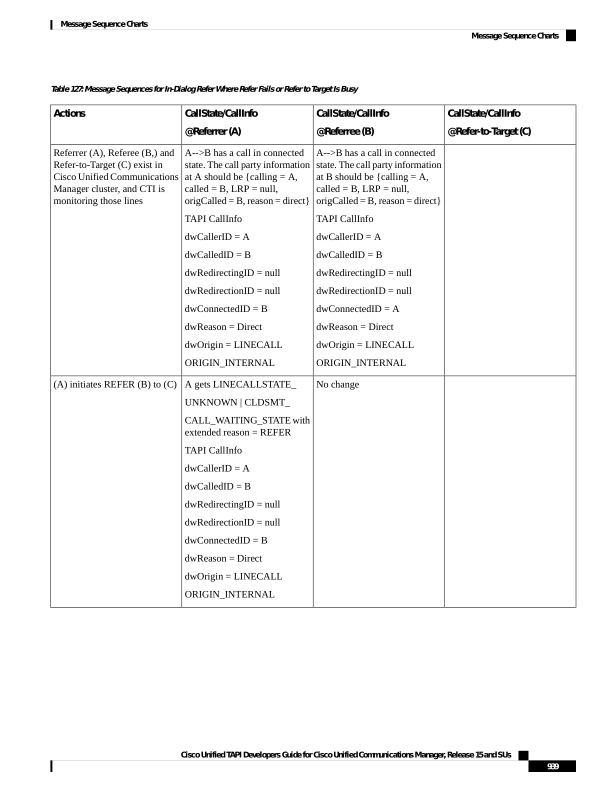
↗ View in doc contextTable 127: Message Sequences for In-Dialog Refer Where Refer Fails or Refer to Target Is Busy CallState/CallInfo @Refer-to-Target (C) CallState/CallInfo @Referree (B) CallState/CallInfo @Referrer (A) Actions A-->B has a call in connected state. The call party information at B should be {calling = A, called = B, LRP = null, origCalled = B, reason = direct} TAPI CallInfo dwCallerID = A dwCalledID = B dwRedirectingID = null dwRedirectionID = null dwConnectedID = A dwReason = Direct dwOrigin = LINECALL ORIGIN_INTERNAL A-->B has a call in connected state. The call party information at A should be {calling = A, called = B, LRP = null, origCalled = B, reason = direct} TAPI CallInfo dwCallerID = A dwCalledID = B dwRedirectingID = null dwRedirectionID = null dwConnectedID = B dwReason = Direct dwOrigin = LINECALL ORIGIN_INTERNAL Referrer (A), Referee (B,) and Refer-to-Target (C) exist in Cisco Unified Communications Manager cluster, and CTI is monitoring those lines No change A gets LINECALLSTATE_ UNKNOWN | CLDSMT_ CALL_WAITING_STATE with extended reason = REFER TAPI CallInfo dwCallerID = A dwCalledID = B dwRedirectingID = null dwRedirectionID = null dwConnectedID = B dwReason = Direct dwOrigin = LINECALL ORIGIN_INTERNAL (A) initiates REFER (B) to (C) Cisco Unified TAPI Developers Guide for Cisco Unified Communications Manager, Release 15 and SUs 939 Message Sequence Charts Message Sequence Charts