McDewey
/mcpPage 972
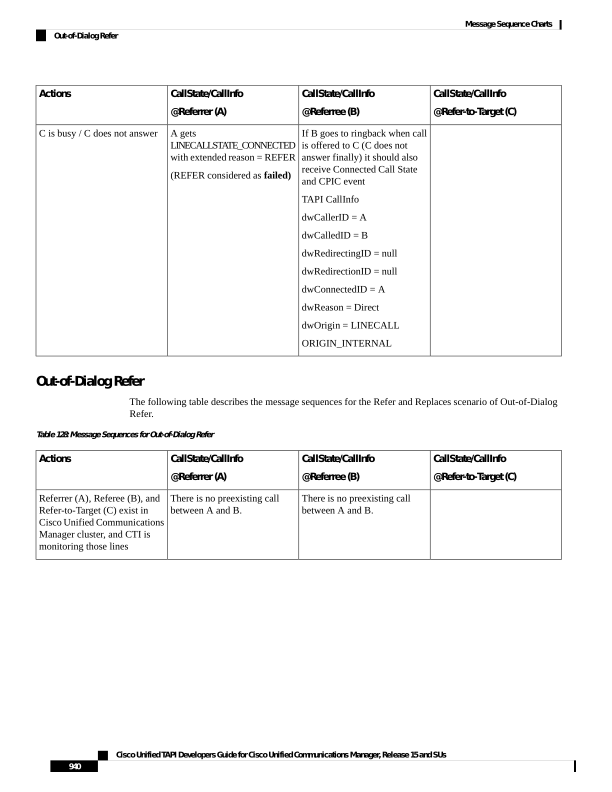
↗ View in doc contextCallState/CallInfo @Refer-to-Target (C) CallState/CallInfo @Referree (B) CallState/CallInfo @Referrer (A) Actions If B goes to ringback when call is offered to C (C does not answer finally) it should also receive Connected Call State and CPIC event TAPI CallInfo dwCallerID = A dwCalledID = B dwRedirectingID = null dwRedirectionID = null dwConnectedID = A dwReason = Direct dwOrigin = LINECALL ORIGIN_INTERNAL A gets LINECALLSTATE_CONNECTED with extended reason = REFER (REFER considered as failed) C is busy / C does not answer Out-of-Dialog Refer The following table describes the message sequences for the Refer and Replaces scenario of Out-of-Dialog Refer. Table 128: Message Sequences for Out-of-Dialog Refer CallState/CallInfo @Refer-to-Target (C) CallState/CallInfo @Referree (B) CallState/CallInfo @Referrer (A) Actions There is no preexisting call between A and B. There is no preexisting call between A and B. Referrer (A), Referee (B), and Refer-to-Target (C) exist in Cisco Unified Communications Manager cluster, and CTI is monitoring those lines Cisco Unified TAPI Developers Guide for Cisco Unified Communications Manager, Release 15 and SUs 940 Message Sequence Charts Out-of-Dialog Refer