McDewey
/mcpPage 974
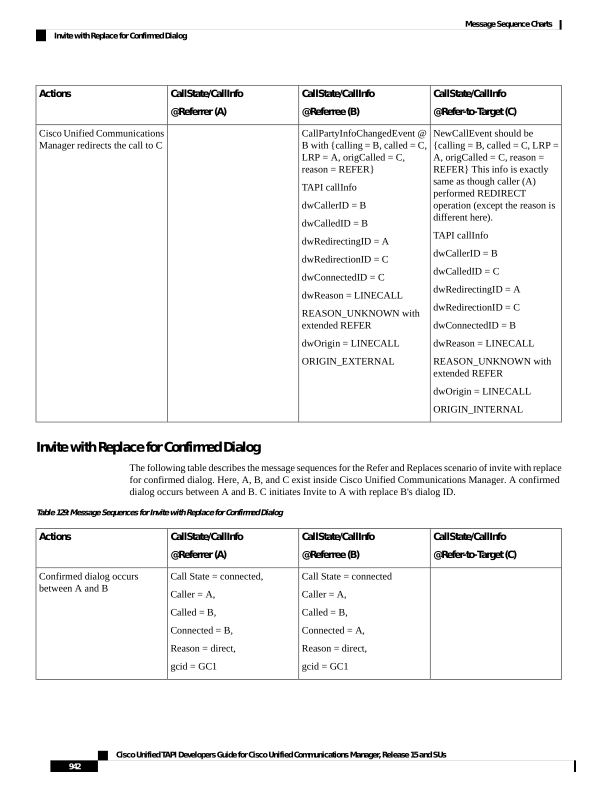
↗ View in doc contextCallState/CallInfo @Refer-to-Target (C) CallState/CallInfo @Referree (B) CallState/CallInfo @Referrer (A) Actions NewCallEvent should be {calling = B, called = C, LRP = A, origCalled = C, reason = REFER} This info is exactly same as though caller (A) performed REDIRECT operation (except the reason is different here). TAPI callInfo dwCallerID = B dwCalledID = C dwRedirectingID = A dwRedirectionID = C dwConnectedID = B dwReason = LINECALL REASON_UNKNOWN with extended REFER dwOrigin = LINECALL ORIGIN_INTERNAL CallPartyInfoChangedEvent @ B with {calling = B, called = C, LRP = A, origCalled = C, reason = REFER} TAPI callInfo dwCallerID = B dwCalledID = B dwRedirectingID = A dwRedirectionID = C dwConnectedID = C dwReason = LINECALL REASON_UNKNOWN with extended REFER dwOrigin = LINECALL ORIGIN_EXTERNAL Cisco Unified Communications Manager redirects the call to C Invite with Replace for Confirmed Dialog The following table describes the message sequences for the Refer and Replaces scenario of invite with replace for confirmed dialog. Here, A, B, and C exist inside Cisco Unified Communications Manager. A confirmed dialog occurs between A and B. C initiates Invite to A with replace B's dialog ID. Table 129: Message Sequences for Invite with Replace for Confirmed Dialog CallState/CallInfo @Refer-to-Target (C) CallState/CallInfo @Referree (B) CallState/CallInfo @Referrer (A) Actions Call State = connected Caller = A, Called = B, Connected = A, Reason = direct, gcid = GC1 Call State = connected, Caller = A, Called = B, Connected = B, Reason = direct, gcid = GC1 Confirmed dialog occurs between A and B Cisco Unified TAPI Developers Guide for Cisco Unified Communications Manager, Release 15 and SUs 942 Message Sequence Charts Invite with Replace for Confirmed Dialog