McDewey
/mcpPage 975
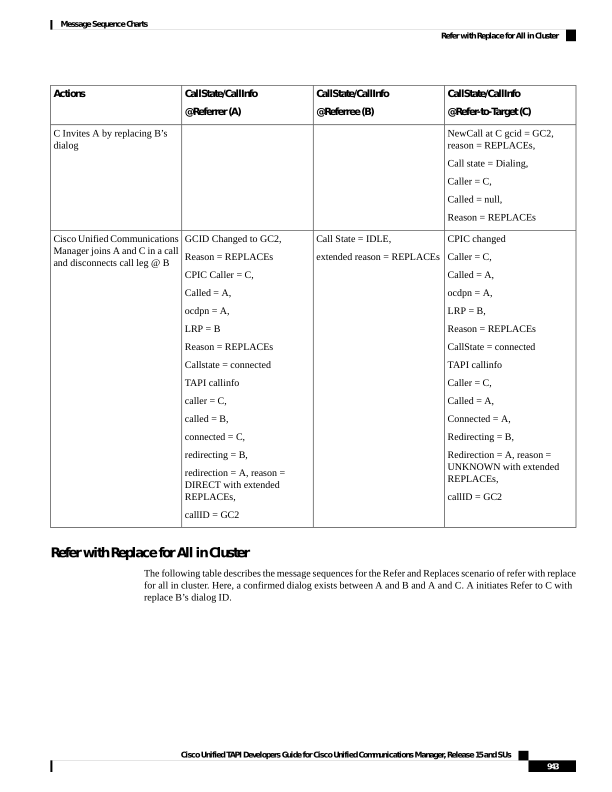
↗ View in doc contextCallState/CallInfo @Refer-to-Target (C) CallState/CallInfo @Referree (B) CallState/CallInfo @Referrer (A) Actions NewCall at C gcid = GC2, reason = REPLACEs, Call state = Dialing, Caller = C, Called = null, Reason = REPLACEs C Invites A by replacing B’s dialog CPIC changed Caller = C, Called = A, ocdpn = A, LRP = B, Reason = REPLACEs CallState = connected TAPI callinfo Caller = C, Called = A, Connected = A, Redirecting = B, Redirection = A, reason = UNKNOWN with extended REPLACEs, callID = GC2 Call State = IDLE, extended reason = REPLACEs GCID Changed to GC2, Reason = REPLACEs CPIC Caller = C, Called = A, ocdpn = A, LRP = B Reason = REPLACEs Callstate = connected TAPI callinfo caller = C, called = B, connected = C, redirecting = B, redirection = A, reason = DIRECT with extended REPLACEs, callID = GC2 Cisco Unified Communications Manager joins A and C in a call and disconnects call leg @ B Refer with Replace for All in Cluster The following table describes the message sequences for the Refer and Replaces scenario of refer with replace for all in cluster. Here, a confirmed dialog exists between A and B and A and C. A initiates Refer to C with replace B’s dialog ID. Cisco Unified TAPI Developers Guide for Cisco Unified Communications Manager, Release 15 and SUs 943 Message Sequence Charts Refer with Replace for All in Cluster