McDewey
/mcpPage 16
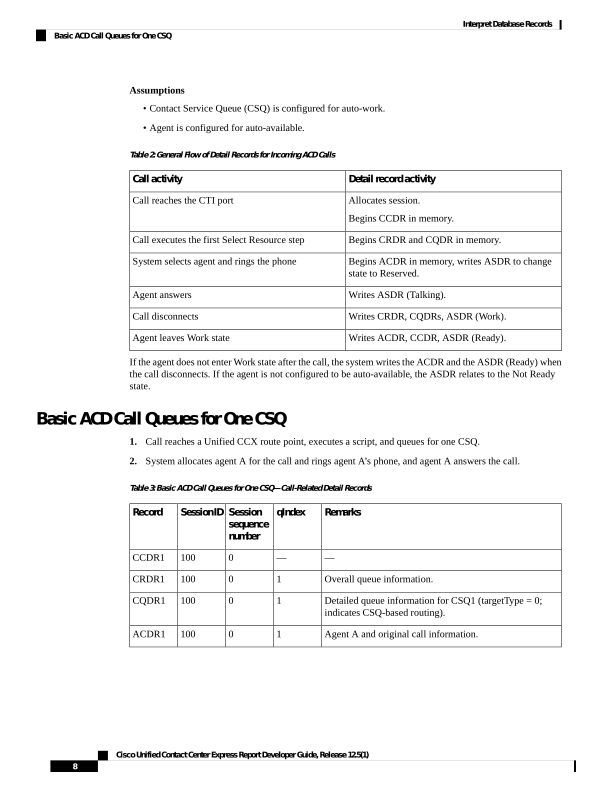
↗ View in doc contextAssumptions • Contact Service Queue (CSQ) is configured for auto-work. • Agent is configured for auto-available. Table 2: General Flow of Detail Records for Incoming ACD Calls Detail record activity Call activity Allocates session. Begins CCDR in memory. Call reaches the CTI port Begins CRDR and CQDR in memory. Call executes the first Select Resource step Begins ACDR in memory, writes ASDR to change state to Reserved. System selects agent and rings the phone Writes ASDR (Talking). Agent answers Writes CRDR, CQDRs, ASDR (Work). Call disconnects Writes ACDR, CCDR, ASDR (Ready). Agent leaves Work state If the agent does not enter Work state after the call, the system writes the ACDR and the ASDR (Ready) when the call disconnects. If the agent is not configured to be auto-available, the ASDR relates to the Not Ready state. Basic ACD Call Queues for One CSQ 1. Call reaches a Unified CCX route point, executes a script, and queues for one CSQ. 2. System allocates agent A for the call and rings agent A’s phone, and agent A answers the call. Table 3: Basic ACD Call Queues for One CSQ—Call-Related Detail Records Remarks qIndex Session sequence number SessionID Record — — 0 100 CCDR1 Overall queue information. 1 0 100 CRDR1 Detailed queue information for CSQ1 (targetType = 0; indicates CSQ-based routing). 1 0 100 CQDR1 Agent A and original call information. 1 0 100 ACDR1 Cisco Unified Contact Center Express Report Developer Guide, Release 12.5(1) 8 Interpret Database Records Basic ACD Call Queues for One CSQ