McDewey
/mcpPage 17
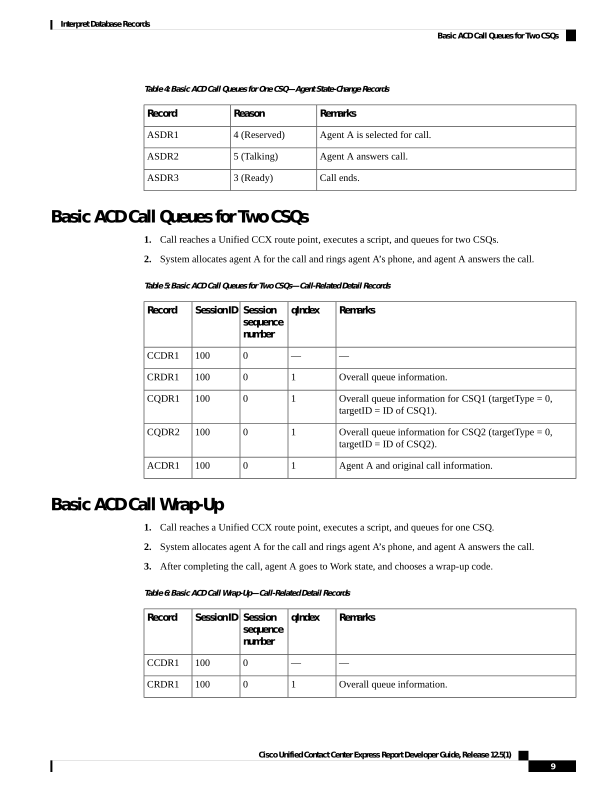
↗ View in doc contextTable 4: Basic ACD Call Queues for One CSQ—Agent State-Change Records Remarks Reason Record Agent A is selected for call. 4 (Reserved) ASDR1 Agent A answers call. 5 (Talking) ASDR2 Call ends. 3 (Ready) ASDR3 Basic ACD Call Queues for Two CSQs 1. Call reaches a Unified CCX route point, executes a script, and queues for two CSQs. 2. System allocates agent A for the call and rings agent A’s phone, and agent A answers the call. Table 5: Basic ACD Call Queues for Two CSQs—Call-Related Detail Records Remarks qIndex Session sequence number SessionID Record — — 0 100 CCDR1 Overall queue information. 1 0 100 CRDR1 Overall queue information for CSQ1 (targetType = 0, targetID = ID of CSQ1). 1 0 100 CQDR1 Overall queue information for CSQ2 (targetType = 0, targetID = ID of CSQ2). 1 0 100 CQDR2 Agent A and original call information. 1 0 100 ACDR1 Basic ACD Call Wrap-Up 1. Call reaches a Unified CCX route point, executes a script, and queues for one CSQ. 2. System allocates agent A for the call and rings agent A’s phone, and agent A answers the call. 3. After completing the call, agent A goes to Work state, and chooses a wrap-up code. Table 6: Basic ACD Call Wrap-Up—Call-Related Detail Records Remarks qIndex Session sequence number SessionID Record — — 0 100 CCDR1 Overall queue information. 1 0 100 CRDR1 Cisco Unified Contact Center Express Report Developer Guide, Release 12.5(1) 9 Interpret Database Records Basic ACD Call Queues for Two CSQs